
Try Easier
How to perform well under pressure...
Today is President’s Day because apparently Presidents just don’t get enough attention already and I kinda thought every day was President’s Day, but turns out, my syndicate is closed today so I don’t have to draw a cartoon, which means it’s a good time to keep a semi-promise (which describes all my promises) I recently made to write about baseball.
And today’s baseball topic was actually inspired by the Winter Olympics and if you’re one of those people who don’t care about either one, just keep reading because you can still learn something useful.

This subject comes up now because Olympic skater, Illya Kuryakin—and I may have that name wrong—was favored to win the Olympic Gold Medal in Men’s Ice Skating, but had a disastrous routine, fell twice, came apart at the seams and finished eighth.
The media (being emotional vampires) swooped in and wanted to know how Illya felt.
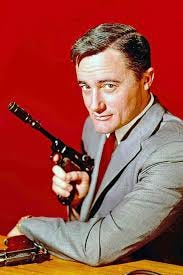
Turns out Illya (OK, I’ll admit it, I actually know his real name is Napoleon Solo—and I hope all you Man From U.N.C.L.E. fans appreciate the obscure reference) felt like crap.

Ilia Malinin (apparently I’m done playing with names) said he tried to treat the competition like any other competition, but then admitted it wasn’t like any other competition:
IT WAS THE OLYMPICS.
And that’s a problem.
Harvey Dorfman
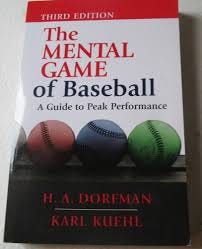
Harvey Dorfman is a sports psychologist who wrote The Mental Game of Baseball which I read and it introduced me to the revolutionary idea that trying harder in Big Situations is a mistake.
You don’t give 110%—first because it’s mathematically impossible and second because you’ve got two sets of muscles (one extends and one contracts)—and when you try too hard, both sets of muscles get involved and that’s the stiff feeling you get when you overthrow a baseball or over-swing a bat and we’ll now take a moment while I try to think of an acceptable joke involving feeling stiff and Viagra.
(OK, fortunately for both of us, I got nuthin’.)
Dorfman wrote that the guys who excel under pressure can keep everything the same; they take a World Series at-bat just like they take a Spring Training at-bat, which, at least for me, was a new concept because I’d been brought up on all those sports movies produced by non-athletes that show Our Hero gritting his teeth, getting up off the canvas (we just switched to a boxing movie, we’ll back to baseball in a moment) trying harder and succeeding.
Dorfman advised athletes to focus on what they could control and then told a story about a Hall of Fame pitcher.
Greg Maddux
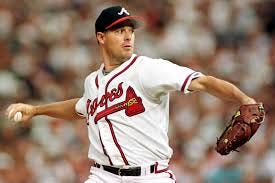
Dorfman wrote that nobody understood what he should be thinking about better than pitcher Greg Maddux (his nickname was “The Professor”) and what a pitcher should be thinking about is executing the next pitch to the best of his ability.
So Dorfman’s at a game Maddux pitches and sees Maddux afterwards and asks Maddux, how was it out there today?
Maddux says (and I’m going to make up the numbers because I don’t remember them precisely): “72 out of 91.”
Meaning Maddux was totally focused on 72 of the 91 pitches he threw and Dorfman said that response was perfect: Maddux didn’t talk about the score, hits, strikeouts, how hot it was, bad calls from the umpire or how his defense played, Maddux was focused on what he controlled—executing pitches.
Greg Maddux had a lifetime ERA of 3.16 in the regular season and an ERA of 3.27 in the postseason, which means Greg Maddux came pretty close to performing the same in both.
George Brett

Through a series of unlikely circumstances never to be repeated, I wound up taking batting practice every Wednesday with George Brett the winter before his last season. (I thought George liked me, but quickly figured out he needed someone to stand by the Iron Mike pitching machine and keep it from jamming while he hit.)
Nevertheless, George could not have been nicer and answered all my dumb questions and when I asked why he succeeded in Big Situations when others failed, he said (and once again I’m paraphrasing):
“Some people can’t forget it’s the World Series, the score’s tied and the winning run’s on second base—I can.”
George Brett’s Lifetime Batting Average is .305, his playoff Batting Average is .337 and this next story explains how you can get better results by playing the same.
Orel Herhiser
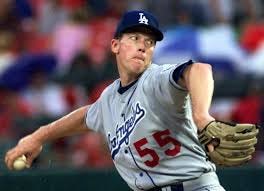
Orel Hershiser—another guy who performed well in the clutch—was covering the Little League World Series when the non-athlete announcer working with him asked Orel; don’t the best athletes “rise to the occasion?”
Orel said you could try that, but maybe you’d be better off playing the same way you always do and letting the other guy try to rise to the occasion and when he played worse and failed, you’d look like a clutch player.
Orel’s Career ERA is 3.48, his playoff ERA is 2.59.
BTW: We were talking about this in the Royals clubhouse when I blurted out, “They say there’s no such thing as a clutch player, but chokers sure exist” and all the players burst out laughing.
Wade Davis

Wade was sometimes referred to as a “cyborg” because he showed very little emotion on the mound and his ability to stay calm came through one night when he was “opening up” (for a right-hander, the front shoulder rotates toward first base too soon) which makes the throwing arm late and flat and the ball tends to miss the target on the arm side.
I noticed Wade having that problem, but he corrected it in the middle of the inning and got the save and some pitchers struggle to fix this problem, so after the game I asked Wade how he did it:
“I aimed left.”
Wade had a Regular Season ERA of 3.94 (which is kind of misleading because it includes his stats as a starter) and a postseason ERA of 1.80.
Shaun White
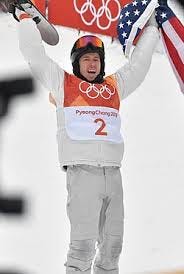
Shaun White—five-time Olympian and three-time Gold Medalist in half-pipe snowboarding (if it had been full-pipe, I’m guessing he would have been beat by Snoop Dogg)—is at these Olympics and they asked Shaun about being successful under pressure and he talked about his routine:
Same meals, same workout, same music and then maybe—hopefully—same performance.
Wade Boggs
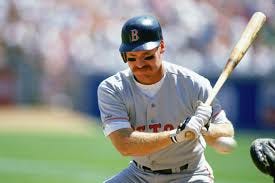
Baseball players are notoriously superstitious and I used to think it was goofy when I heard about some of their rituals. For instance, Wade Boggs:
Ate chicken before every game.
Took batting practice at precisely 5:15.
Ran wind sprints at precisely 7:15.
During infield practice, took exactly 150 ground balls.
Took the same path from the dugout to his position.
And before every at-bat, wrote the Hebrew word “Chai” (it means “Life”) in the dirt.
Wade has a .328 Lifetime Average.
Alex Gordon

Some players drive the same way to the park every day, put their uniforms on in a precise order and if you’re an Alex Gordon fan (and if you know Gordo, you’re fan) he refused to change his hat no matter how dirty and smelly it got—his teammates complained about it—chewed three pieces of bubblegum during every game and had to stand in the same place before every at-bat. (Alex wound up killing the grass and you could see his footprints from the upper deck.)
When he was scuffling Gordon’s calm demeanor was criticized, because to fans and the media—non-athletes—it looked like Alex didn’t care. When Gordon started having success his calm demeanor was praised and Alex got complimented for his professionalism.
Same guy, going about his business in the same way; what changed was our reaction to it.
I eventually realized these guys were trying to keep everything surrounding the game the same, so maybe once the game started, they could perform the same and not react to pressure.
Today’s Lesson
Emotions are easy, staying calm is hard.
When 40,000 fans are screaming, when an Olympic Gold Medal is on the line, when it’s the World Series, the game’s tied and the winning run’s on second base, trying harder is the natural reaction.
One last anecdote before I go:
After our last session of batting practice and George Brett was headed for spring training, he grabbed my batting helmet and a sharpie and wrote some advice inside. The advise included his personal mantra that he’d use during games when things got tense:
“Try easier.”
And if that doesn’t work, start eating chicken every day.
You had me at Ilya Kuryakin.
Thanks so much for explaining these concepts. Sure wish I would have received these various gems of advice growing up.
Come to think of it, maybe not knowing or understanding these concepts explain why I don't have a plaque in the Hall of Fame. I have always wondered why I never made it to Cooperstown.
Anyway, now that I am wise to these principles I am going to put them to immediate use and start trying easier to forget that unmitigated disaster in the Oval Office.