
Watching Baseball: Pitch Selection
Take today’s baseball essay with a gunnysack full of salt because these days when I watch baseball I don’t keep score, don’t take notes and don’t pay attention to the often misleading analytics that baseball offers fans and I just realized I’m not even 100% sure I know what a “gunnysack” is.

OK, just looked that up and a gunnysack is a burlap bag (which I knew) and the term “gunny” comes from the Sanskrit word “goni” (which I didn’t know) and “goni” means “sack” so when we say “gunnysack” we’re literally saying “sack sack” which sounds pretty stupid unless you’re a member of Duran Duran or a resident of Pago Pago or former Secretary General of the U.N. Boutros Boutros-Ghali, then you’re asking what the big deal is.
Moving on before we get even more bogged down…
The Kansas City Royals are tied for last place in the AL Central, only two Big League teams have scored fewer runs and I started thinking about all this after the Kansas City Star published an article which offered a lot of numbers about just exactly how bad the Royals have been and some generic quotes about players “trying to do too much” or needing to “stay within themselves,” neither of which are overly informative if you want to know why the Royals are putting up those bad numbers or what they have to do to put up better ones.
Just to be clear:
I don’t have those answers either, but I’ll tell you what I’ve been told and it might explain what “trying to do too much” and failing to “stay within yourself” look like.
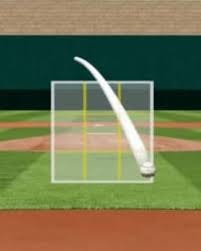
BTW: Everything I’m about to say applies to all baseball teams, not just the Royals, and we’re not going to talk about situational hitting or hitting with two-strikes, just hitting in general and while the strike zones they’re using on TV makes things somewhat clearer for fans watching at home, those strike zones aren’t 100% accurate (it’s a 2-D box measuring a 3-D zone).
If I think of any other exceptions to what I’m about to say, I’ll let you know, but now let’s get the show on the road and today we’ll talk about…
Pitch Selection
When I first began hanging around professional ballplayers I naively assumed good hitters could hit anything and everything, but soon found out good hitters were good hitters because they didn’t try to hit anything and everything.
Good hitters are selective, bad hitters swing at marginal pitches.
Two anecdotes come to mind (I’ve told them before, but bear with me because they explain a lot) and we’ll start with Jason Kendall and his 2,000th hit bat. When I picked up the 2,000 hits bat and said that’s a lot of hits, Jason said:
“1,800 of them came on pitches right down the middle.”
Generally speaking hitters make a living hitting a pitcher’s mistakes, because as Jason observed next:
“All that other shit is hard to hit.”
Jason didn’t worry if they were fastballs or off-speed—if they were fastballs he’d hit them the opposite way, off-speed and he’d pull them—he just grooved his swing to the middle of the strike zone and simplifying the game seemed to work for him because Jason’s got the fourth-most hits for any catcher in baseball history.
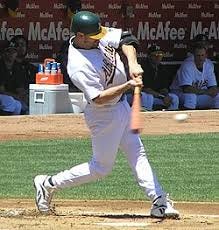
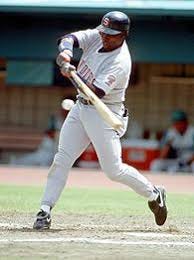
This picture explains a lot; Jason’s about to hit a pitch down the middle back up the middle and when a hitter does that his bat’s at a 90-degree angle to the path of the pitch (in baseball slang it’s “squared up”) which makes it easier for the hitter to make contact with the bat’s sweet spot. Pull the ball and the angles get sharper and hard contact gets more difficult.
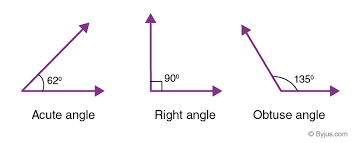
(And if you didn’t understand all that, just go ahead and trust me and every hitting coach who ever lived.)
Now here’s a slightly different approach:
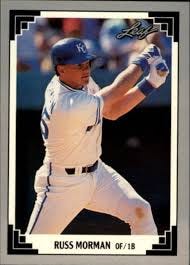
I’m watching a minor league game and Russ Morman is hitting fourth. The opposition pitcher throws the 3-hole hitter a first-pitch curve; the 3-hole hitter swings and fouls it off. Then the pitcher throws a fastball and the 3-hole hitter fouls that off and eventually goes on to strike out.
Now Russ is at the plate:
Same pattern; first-pitch curve for a strike, but Russ doesn’t swing. Then a fastball strike and Russ doubles off the wall.
Later I ask Russ if the difference in the two at-bats was the 3-hole hitter swinging at the first-pitch curve and Russ taking the first-pitch curve; both batters were 0-1 after the first-pitch curve, but one swung and one didn’t.
Russ says yes and explains.
Pitchers are trying to get you to swing at everything: up/down/in/out/hard/off-speed and if a hitter swings at everything his timing might be off when he gets the pitch he should hammer.
Jason and Russ had two different approaches, but were doing the same thing: being selective. Russ was doing it by pitch type; Jason was doing it by location.

Hall of Famer Mike Schmidt (548 homers) said every at-bat contained a hittable fastball; his job was to find it.
Hall of Famer Tony Gwynn (3,141 hits) wrote two books saying he was looking for pitches on the outside half of the plate and still got pitches on the outside half of the plate because he was patient and waited for the pitcher to make a mistake.
All these hitters had a pitch they were looking for and when they were going good, didn’t get their timing messed up by swinging at anything else, so when they got the pitch they were looking for they rarely missed it.
When a hitter is “trying to do too much” or failing to “stay within himself” he’s trying to hit pitches he doesn’t hit well and if you’re wondering why a hitter would do that, I’m glad to pretend you asked.
Runners In Scoring Position
Hitters like RBIs because RBIs get you paid, but smart pitchers know hitters like RBIs and are more likely to chase marginal pitches, so with runners in scoring position you might see a lot of nibbling and off-speed pitches and a hitter who chases that stuff is probably making a mistake.
The hitter has to be disciplined and wait for his pitch, but if never gets his pitch, also be willing to take his walk and leave the RBI up to the next guy.
Semi-recently I saw Salvador Perez come to the plate with two outs and runners in scoring position and Salvy swung at the first pitch—down and away, out of the zone—and hit a weak grounder. At-bats like that are one of the reasons the Royals are having trouble scoring runs.
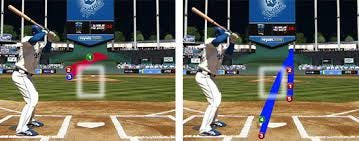
The above image depicts two at-bats Sal had against Madison Bumgarner in the 2014 World Series and, yes, Sal swung at some of those pitches even though none of them were in the strike zone. (To be fair, the pitch Salvy hit to win the Wild Card game wasn’t a strike either.)
Word of warning:
Teams that are bad with runners in scoring position tend to chase, but you’ll also see hitters taking hittable fastball strikes, which is generally a sign of a hitter who’s thinking too much.

Jeff Francoeur once hit a home run and mentally wrote that pitch off—“He won’t throw me that again”—but the pitcher (or possibly the catcher) threw Frenchy the exact same pitch in the next AB and Frenchy was pissed at himself for thinking too much and taking a hittable pitch for a strike.
So when you watch a game pay less attention to how a batter swings a bat and more attention to what he swings at. If he’s swinging at marginal pitches early in the count and not getting the hittable pitches in play, he’s got a problem.
Heat Maps
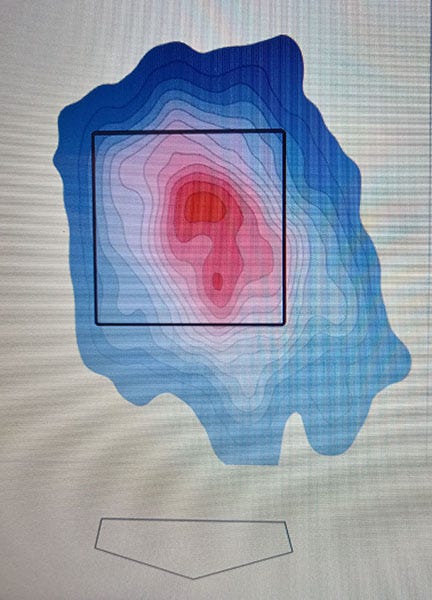
Forgive the crappy resolution because when I tried to download these images my laptop wanted to download the whole page and then stored that image somewhere in The Laptop Twilight Zone. I couldn’t find them, so I took pictures with my phone because even though the images are crappy they still tell the story.
These are heat maps and they show what locations hitters hit well (the red part) and what they don’t hit well (the blue part) and anytime you see a hitter swing at a pitch out of his hot zone before he has two strikes, odds are that’s a bad swing.
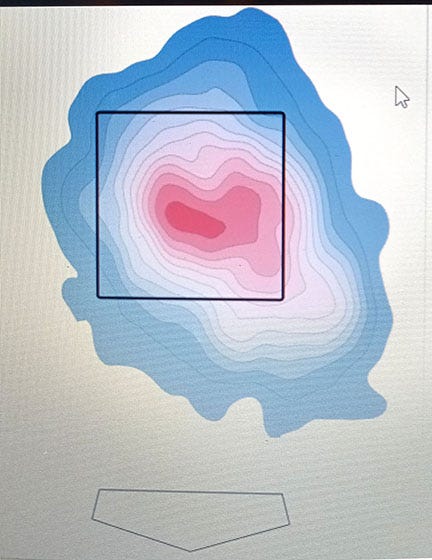
One of these heat maps belongs to Salvador Perez, the other to Bobby Witt Jr. (and now I really wish I labeled them) but they tell the same story: hitters make a living hitting mistakes, not good pitches and when you see hitters chase marginal pitches before they have two strikes, odds are, the hitter’s screwing up.
Why It’s Harder Than I Just Made It Sound
Former manager and hitting coach Clint Hurdle once told me if you blink your eyes twice, that’s the amount of time a 90 MPH fastball takes to leave the pitcher’s hand and hit the catcher’s mitt and now they’re throwing 100 MPH like it’s nothing, so bottom line: a hitter doesn’t have much time to react to what he sees.
Generally speaking, hitters start their swings on every pitch and hold up (or at least try to) when it’s not the pitch they’re looking for.
But pitchers see the heat maps too and they’ll start breaking pitches or changeups right down the middle, but then the pitch moves and if the hitter didn’t spot the spin (slider seams form a red dot, curves spin more horizontally than fastballs) the hitter swings out his ass and misses by a foot-and-a-half while you scream at your TV at home.
And some hitters identify pitches even earlier than that:
Tony Gwynn said if the pitcher was throwing a breaking pitch his hand would be on the side of the ball, fastball and Tony saw more ball than hand, changeup and Tony saw more hand than ball and when I tried Tony’s approach all I saw was a collection of blurs.
Recently, Eric Hosmer was doing the color with Salvy at the plate and Hos said if you see spin on a ball right down the middle you don’t want it; the spin will take it out of the zone. Hos said if you see spin on a ball coming right at you hang in there, that’s going to break into the zone and might be a good pitch to hit.
But that’s hard to do:

Kevin Seitzer once got hit in the face and I asked what his last thought was before getting nailed and Kevin said his last thought was:
“That’s not a slider.”
Today’s Lesson
Hitting is hard.
I mean really hard.
But it gets even harder when you swing at pitches you don’t hit well.
As I’ve said repeatedly—which clearly won’t stop me from saying it again—baseball is a lot more interesting when you know what’s happening and now you have something else to look for and a greater chance of understanding why someone got a hit or made an out and while you and I might find this interesting, I’d strongly advise you to refrain trying to explain it to your spouse. As either Pythagoras or Leo Durocher said:
“A fool is known by his speech, and a wise man by his silence.”
(Which is rich coming from someone who just wrote 1,924 words about hitting a ball with a stick.)
But try telling your spouse about gunny sacks; they might find that interesting.
The more I watch, the more I appreciate how hard hitting is. And since I'm usually just watching on TV, I don't see what the hitter sees. Thank you for this one, Lee. I always appreciate your baseball posts.
I'm going to talk with my spouse (we met studying classical Greek & Latin) about the origin of the word "gonad," whether it's Sanskrit "sack," or Greek, "seed." Or if ancient scientists put those meanings together for "seed sack."
It'll be a fun lunch topic.
🧵Gunnysack, eh?
Well, glory be! I’ll be HORNSWOGGLED, 😉‼️