
What AI Can’t Do
One sunny day I’m watching a Royals game and in the later innings a Royals player who shall remain nameless for reasons that will soon become apparent gets thrown out on a very close play while trying to steal third base. The Royals go on to lose and after the game the Nameless Player is slumped in his chair in front of his locker, looking like the dictionary picture next to the word “glum.” I walk up and ask:
“Out or safe?”
The Nameless Player says:
“If that fat fuck had moved his ass, he would have seen I was safe.”
Now you know why the player isn’t being named, because calling umpires “fat fucks” is not considered a good career move for ballplayers. Next I’ll explain his complaint:
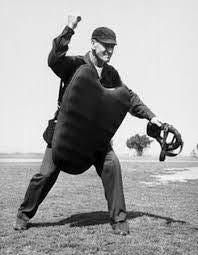
Generally speaking umpires want to call strikes and outs because strikes and outs move the game along. You might enjoy a four-hour ballgame; they don’t.
That being the case, smart infielders don’t mind getting in-between the umpire and a tag, especially if it looks like runner is going to be safe (maybe the infielder will get the call) and when the infielder blocks the umpire’s view—intentional or not—the umpire needs to move to see the play and get the call right.
So now the other reporters see I’m talking to the Nameless Player and rush over with cameras and microphones and ask the Nameless Player:
“Out or safe?”
This time the Nameless Player says:
“It was a bang-bang play and umpiring’s the hardest job in baseball.”
The Nameless Player and I look at each other and burst out laughing. After the other reporters walk away, I ask:
“What happened to ‘Fat Fuck’? That’s going to be my headline.”
Nameless laughs and says:
“That was just for you, Lee.”
While a Big League ballplayer didn’t want me writing that he had insulted an umpire, he let me know I should watch the play again and pay attention to the positioning of the third baseman and umpire. The player was right; he was safe.
And the umpire was a fat fuck.
Example #2
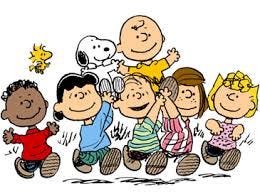
Charles Schulz—the guy who drew Peanuts—showed up at a political cartoonist convention (yes, we used to have those) and told a story involving his grandmother: they’d go to the movies together and when the cartoons were over (yes, we used to have those, too) he’d turn to his grandmother and tell her not to worry, even though the theater had gone dark, the movie was about to start.
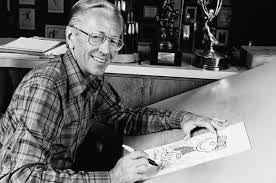
Schulz said he had turned that story into a cartoon strip and then pointed out he was the only cartoonist in the Wide World of Sports who could draw that cartoon strip because it was based on an incident that happened to him and nobody else. He encouraged us to look for things in our own lives that could be used to create unique material.
Sounds like a horseshit cartoon strip, but the point Schulz made was good one.

When Jason Alexander was figuring out how to play George Costanza on Seinfeld, he complained about a script and said the incident being portrayed would never happen and no sane person would react that way if it did.
Larry David said:
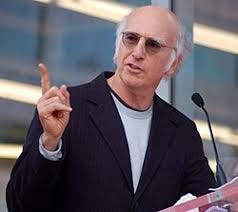
“It happened to me and that’s exactly how I reacted.”
Seinfeld was unique because they were drawing on real life experiences.
Example #3

One day I’m coming back from lunch and use the back door employee entrance to the Kansas City Star and standing in front of that back door entrance is an elderly lady, crying her eyes out.
Being a generally unsympathetic human being I was faced with a dilemma: do I ask her what’s wrong and try to help her or say screw this and go use the Star’s side entrance?
But I’m also a lazy human being and using the side entrance would require at least half a block of extra walking and in this case laziness beat callousness. (If I was a cartoon character I’d have a devil on one shoulder and an even bigger devil on the other.) So against my better judgment I ask the woman what was wrong.
Turned out…

She had received a notice that the Star was cancelling her subscription because she hadn’t paid her bill, but she was sure she had and if there was any continued confusion she was willing to write a check right then and there because the paper was important to her, but the security guards at the front desk wouldn’t take her check or let her into the Star building because she didn’t have an appointment and didn’t know who to ask for.
One more time…
AN ELDELRY LADY LEFT HER HOUSE AND DROVE DOWNTOWN TO GIVE THE KANSAS CITY STAR MONEY BECAUSE THE NEWSPAPER WAS SO IMPORTANT TO HER, BUT WE WERE TOO DISORGANIZED AND HARD-HEARTED TO TAKE IT.
So I said, “OMG, that’s horrible, but it’s really not my problem so move your ancient ass aside because you’re blocking the employee entrance.”
Just kidding.
I didn’t say it was horrible.
Just kidding again.
In reality I said come with me and let her inside (which broke a rule) and took her to the right person who could deal with her problem, but the story obviously stuck with me as an example of an organization getting so caught up in following their petty rules they didn’t realize this was an obvious time to break some.
Artificial Intelligence/Genuine Stupidity
We’ve been hearing a lot about how awesome AI is going to be and all the cool things it can do, so I ask Google “what can’t AI do?” and here’s what Google’s Artificial Intelligence had to say about itself:
“AI cannot truly understand, feel or innovate.”
Wow, sounds just like our current president—but wait, there’s more:
“Because it operates by predicting patterns in data rather than reasoning logically, it fundamentally lacks common sense, emotional intelligence, and moral judgment.”
AI goes on to tell me it cannot feel emotions which makes it unsuited for roles that require human connection, doesn’t understand nuance or sarcasm, fails to adapt when faced with unpredictable situations, cannot create or innovate or form new ideas; all it does is recombine what already exists. It’s also easily fooled and provides “convincing falsehoods”—AKA “hallucinations.”
And this is what we’re going to put in charge?
What AI Can Do
After every game the Kansas City Royals gave reporters a blue sheet of paper with facts they hoped those reporters would use in their stories.
I’ve thought about those blue sheets of paper more than once and wondered when they’d start feeding those facts to an AI program which would happily produce a mediocre game story and the only thing wrong with this idea is the adjective “happily” because AI can’t feel anything, especially when you get fired and apparently a lot of management types have the same emotional bandwidth.
But AI can’t go into a baseball clubhouse and get an entirely new story based on the previous relationship formed with a player, it has no unique Real Life experiences to draw on and it can’t feel empathy or say this rule is dumb and we either need to get rid of it or make a new rule.
And despite all these glaring flaws and drawbacks, to answer my previous question: yes, we are going to put AI in charge because some short-sighted people think it will make them even more money—and it will.
Because no matter what they tell us, AI, 5G, delivery drones and self-driving cars are about firing us complicated, messy humans who have to use the bathroom and want lunch breaks and healthcare and two weeks’ vacation once a year.
And as long as you don’t care about the quality of what AI produces—the lack of originality, common sense or empathy—if you’re rich and want to be even richer, AI can make you money.
The rest of us are fucked.
I love being able to ask Google what tune a character in season 6, episode 11, of my favorite television show was humming while she did the dishes.
The rest of it scares the $#@t out of me.
I have already promised myself to never use AI to generate comment or content, because if I get that lazy it's time for me to catch the redeye to my next life.
(Shirley MacLaine swore to me there is an afterlife and I've believed everything else coming from her, so why change now?)
One of my greatest regrets about having to grow up is I no longer get to laugh my ass off while watching the shenanigans of Wile E Coyote, or the biting humor of Bullwinkle and Rocky.
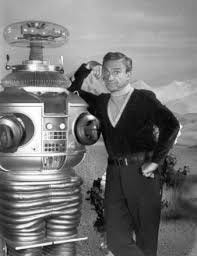
Thanks for the pic from Lost in Space. To this day my brother and I use, "Warning Will Robinson" as often as we can.
Since AI doesn’t understand nuance or sarcasm, I'm pretty sure your expertise is safe. Which is great for us.